
SEMICONDUCTOR REVIEW THANK YOU FOR SUBSCRIBING
× 
Semi Conductor Review Weekly Brief
Be first to read the latest tech news, Industry Leader's Insights, and CIO interviews of medium and large enterprises exclusively from Semi Conductor Review
Semiconductor Review: Specials Magazine

Crystal quality—the microscopic foundation of every semiconductor device—is often the hidden bottleneck limiting the development of next-generation technologies. For engineers pushing the boundaries of power and high-frequency electronics, as well as optoelectronics, access to ultra-high-quality materials is essential. That’s where Adroit Materials steps in, explains Dr. Sitar, the company’s founder. What sets Adroit Materials apart is its proprietary technology and deep expertise in growing ultra-high-quality III-nitride device structures directly on single-crystalline aluminum nitride (AlN) or gallium nitride (GaN) substrates. This approach delivers a million-fold improvement in crystal quality compared to conventional methods using sapphire, silicon, or silicon carbide substrates—translating to dramatically enhanced device performance, reliability, and thermal management. Adroit Materials is purpose-built to support researchers, startups, and development teams creating devices that don’t fit within traditional semiconductor manufacturing workflows. Rather than focusing on high-volume production, the company has adopted a boutique approach to epitaxy, delivering device layers with unmatched precision. Unlike large foundries geared for scale, Adroit Materials is agile—designed for rapid prototyping, customized material solutions, and accelerated experimental iteration, all without sacrificing crystal quality. “We’re not trying to be the TSMC of wide bandgap materials,” says Dr. Kirste, COO of Adroit Materials. “We aim to be the go-to partner for innovation—where researchers and engineers can realize their ideas quickly and without compromise.” A Collaborative, Boutique Foundry Model Adroit Materials’ business model is tailored for early-stage innovation. Its customers typically require low-volume prototypes—often just a handful of wafers—of novel, nonstandard device structures with tight quality control and fast feedback loops. These needs are rarely met by large-scale foundries, where even a minor process change can trigger months of revalidation. In contrast, Adroit Materials offers hands-on engagement and process flexibility, acting more like an extension of its clients’ R&D teams than a traditional vendor. This collaborative model is a key differentiator. Instead of supplying off-theshelf wafers, Adroit Materials co-develops material stacks with customers—tuning doping levels, layer compositions, and film thicknesses based on evolving performance goals. The result: a significantly faster design–build–test cycle, enabling customers to accelerate innovation while collecting high-confidence data from production-grade materials.

Top Capacitor Solutions Provider 2025
As global energy demand surges and next-generation applications, from AI data centers to electric vehicles, push the boundaries of existing grid technologies, including capacitor technology, the industry faces a critical need for new solutions and materials that deliver greater efficiency, reliability and thermal performance. Future Market Insights projects robust growth for the film capacitor market, driven by the need for advanced energy storage solutions that can withstand higher temperatures and deliver longer lifespans. Peak Nano’s breakthrough Peak NanoPlex® films directly address these challenges, offering the first U.S.- manufactured, nano-layered dielectric films that enable capacitor manufacturers to scale for the future and close critical supply chain gaps. ® delivers up to four times more energy storage, three to five times longer operational life, and reliable performance at temperatures far beyond the limits of conventional materials like biaxially oriented polypropylene (BOPP). With this technology, Peak Nano is enabling U.S. innovation and leadership in the capacitor industry, which is poised to power the next era of energy innovation. Experts in Developing Breakthrough Nanotechnology Systems Peak Nano specializes in developing next-generation capacitor film that guarantees more scalable, stable, smarter and adaptable power grids. The company produces highly ordered, nano-layered films at commercial scale by synergistically engineering proven polymers into innovative configurations using a proprietary nanolayer extrusion process. This unique approach allows Peak Nano to meet growing industry demand with unmatched versatility. “We’re the first U.S.-based materials development company bringing high-performance capacitor film to market that seamlessly retrofits into existing systems,” says Dr. Michael Ponting, chief scientific officer. “Our goal is to help meet energy demands and modernize the nation’s energy infrastructure, giving equipment manufacturers a way to future-proof their systems.” Its flagship technology—NanoPlex®—pushes the boundaries of what traditional capacitor films can achieve. The technology, developed in collaboration with Case Western Reserve University, the Defense Advanced Research Projects Agency (DARPA) and the Naval Research Laboratory, is a nano-scale metamaterial used for optics, capacitor films and specialty films. Peak Nano’s technological edge is led by an exceptional team of inventors from the original project, including Mason Wolak, the vice president of capacitor development. Its deep institutional knowledge, combined with a growing team of specialists in polymer science, capacitor engineering and advanced manufacturing, gives the company a competitive advantage. Leading the Way in Purpose-Built Innovation For over five decades, the capacitor industry has relied on a narrow set of materials, such as polypropylene or polyester, with new developments often taking more than a decade to reach market readiness. Peak Nano is turning this model on its head. By working with prominent capacitor manufacturers and end-users to identify industry needs, such as improved thermal performance without sacrificing the reliability of polypropylene in capacitors, Peak Nano has leveraged NanoPlex® technology to develop layered dielectric film (LDF) that offers low dissipation factor performance similar to BOPP, but with operational temperature ratings that are 25 to 35 degrees Celsius higher. Early evaluations of NanoPlex® LDF have been overwhelmingly positive. Most clients have advanced from qualification to prototype or scaling phases, demonstrating broad industry interest and validation.

Top Electronic Component Distributors 2025

Electronic components connect the world, but the path they travel is anything but smooth. From raw materials to finished products, their journeys are filled with bottlenecks, disruptions, and uncertainty. Staying ahead requires designing a supply chain that’s as flexible and resilient as the innovations it helps bring to life. This is where Baxter Electronics continues to distinguish itself—by delivering adaptable, high-touch solutions rooted in deep expertise and an unwavering commitment to its customers. As a global independent distributor of electronic components, Baxter has built its business around the needs of its customers, not the constraints of the market. While challenges such as tariffs, obsolescence, or long lead times may arise without warning, Baxter’s agility has earned it a loyal and growing customer base. “We’re not here to just sell parts—we’re here to offer solutions,” says Caanan Brown, CEO. “When a customer comes to us, it’s rarely as simple as a part number. It’s often a supply chain puzzle, and we pride ourselves on being the partner that can help solve it.” Baxter’s customer-first mindset isn’t a marketing slogan— it’s a principle that drives every facet of the company’s operations, from procurement to supply chain management. Unlike authorized distributors, who are often bound by agreements with specific manufacturers, Baxter operates with full independence. That freedom allows the company to evaluate a broader range of options and tailor sourcing strategies to each customer’s unique needs. In recent years, the volatility of the global supply chain has exposed vulnerabilities across many industries. For Baxter Electronics, this environment has only underscored the value of its core strengths: innovative procurement and supply chain adaptability. Whether a client is facing a last-minute shortage, skyrocketing prices, or a legacy part that has suddenly gone obsolete, Baxter is built to pivot quickly. One customer, for example, approached Baxter with a significant tariff issue on an interconnect component sourced from China. Instead of simply absorbing part of the cost or sourcing more stock at a higher price, Baxter leveraged its global network to quickly identify an alternative manufacturer that met the technical specifications and delivered cost savings—even after factoring in logistics. These kinds of behind-the-scenes solutions define Baxter’s value.
CXO INSIGHTS

Accelerate the Semiconductor Workflow with a Standardized Measurement Framework
Mike Watts, Head of Industry Marketing, Semiconductor and Electronics, NI (National Instruments)

Recruitment Challenges in the HighTech Packaging World
August Miller, Director, R&D Design Center and Daniella Olson, Staff Engineer, Amkor Technology, Inc

Test and Quality, Creston's Approach to Customer Loyalty
Ivan Farias, Senior Director, Production Operations, Crestron Electronics

Trends to Watch in the 3D Era
Aaron Fellis, Corporate Vice President and General Manager of Dielectric ALD Products, Lam Research [NASDAQ: LRCX]

Innovations in Passive Components for Power Densification
Peter A. Blaise, Senior Director Application Engineering, KEMET Electronics Corporation

Emerging Technology Focused on Optoelectronic
Erin Byrne, Segment CTO and VP, Industrial Solutions Segment, TE Connectivity

Harnessing the Power of Additive Manufacturing to Advance Semiconductor Capital Equipment Performance
Scott Green, Director Advanced Software R&D, 3D Systems Corporation


IN FOCUS
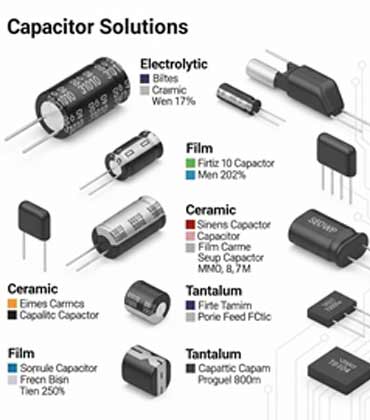
Empowering Electronics with Capacitor Solutions Providers
Technological advancement has profoundly impacted capacitors' design, performance, and functionality.
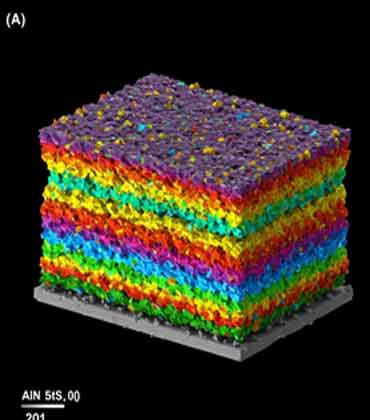
III-Nitrides on AlN: Revolutionizing Power and Optoelectronics
III-nitrides on AlN substrates enhance semiconductor performance, offering improved thermal conductivity and crystalline quality, crucial for high-frequency, high-voltage applications in telecommunications, optoelectronics, and power conversio
EDITORIAL
Redefining Semiconductor Performance with Scalable Systems
The semiconductor industry is undergoing significant change as the demand for faster computing, stronger connectivity and smarter devices intensifies. As technologies advance, companies across the value chain are aiming to make targeted investments, from fabrication through final production, with many refining their approach to support performance at scale. These shifts shape the development process and the pace at which new products enter practical use.
A notable development is the adoption of III-nitride materials on aluminum nitride (AlN) substrates. Compound semiconductors like gallium nitride and aluminum gallium nitride are gaining ground for their efficiency in high-frequency and power-intensive applications. AlN substrates bring thermal stability and structural compatibility, making them well-suited for improving performance in RF, power switching and optoelectronics. As demand grows for compact and energy-efficient solutions, this material combination continues to draw interest from manufacturers and research teams.
To support this wave of innovation, electronic component distributors are evolving their role to meet the demands of a faster and more dynamic supply chain. Beyond fulfilling orders, many now provide sourcing guidance, inventory planning and engineering support. With product lifecycles shortening and development cycles accelerating, distributors help companies respond quickly without sacrificing reliability or regulatory standards.
Capacitor solution providers are also adapting to meet shifting requirements. As systems become more compact and power densities increase, newer capacitor types with improved thermal tolerance and volumetric efficiency are in demand. These manufacturers scale for volume and collaborate with OEMs to deliver components tailored for electric vehicles, industrial systems and communications infrastructure.
In this edition of the Semiconductor Review, we explore the recent developments across the semiconductor space, including the growing use of III-nitrides on AlN, the evolving role of component distributors and advancements in capacitor materials that are strengthening the industry's ability to scale and support next-generation systems.
We hope this edition of the Semiconductor Review helps you find the right partner for your business requirements.
This content is copyright protected
However, if you would like to share the information in this article, you may use the link below:
https://www.semiconductorrevieweurope.com/edition/july-2025-18.html