
SEMICONDUCTOR REVIEW THANK YOU FOR SUBSCRIBING
× 
Semi Conductor Review Weekly Brief
Be first to read the latest tech news, Industry Leader's Insights, and CIO interviews of medium and large enterprises exclusively from Semi Conductor Review
Semiconductor Review: Specials Magazine
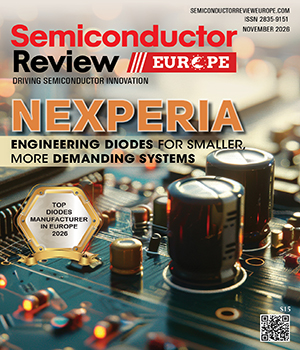
Nexperia
Engineering Diodes for Smaller, More Demanding Systems
Smaller printed circuit boards with increased power-handling capacity are increasingly required for automotive and industrial electronic devices. Yet, small-size components pose a problem of heat dissipation, and minimising losses involves strict management of forward voltage and leakage current. Nexperia brings semiconductor design and packaging engineering together to reconcile these competing demands. Its planar and Trench Schottky rectifiers help reduce electrical losses and heat buildup, while Clip-bonded FlatPower packages dissipate heat efficiently without taking up much board space. Automotive-qualified devices and vertically integrated manufacturing extend this engineering focus to component reliability and production continuity. A 2025 extension illustrates the emphasis on fit. Nexperia introduced 16 planar Schottky diodes in its CFP2-HP package, divided equally between industrial and AEC-Q101-qualified automotive versions. Their reverse-voltage ratings span 20 to 60 V, with average forward-current options of 1A and 2A. Each device's body measures 2.65 x 1.3 x 0.68 millimetres, including leads. Its range includes 22 planar Schottky devices for industrial and automotive applications, rated for reverse voltages of 30 - 100V and average forward currents of 1 - 3A. An exposed heatsink enables heat dissipation within a package measuring 3.7 x 1.8 x 0.9 millimetres. Designers can match thermal requirements to footprint constraints.
Micro Electronics
A thin-film design may work on paper. Bringing it into production requires more than depositing the right materials. The material combination must be technologically feasible, the layers must behave as intended and the finished structure must work with the client’s substrate and support downstream processes such as soldering and wire bonding. These considerations become especially important when the design calls for non-standard materials or complex layer combinations. TTS, s.r.o. helps clients move thin-film designs from theory to practical manufacturing. The Prague-based SME company brings more than 50 years of experience in thin-film design and deposition, specializing in customized coating and multilayer metallization systems. Its expertise also extends to photolithography, enabling it to support applications that require patterned thin-film structures. Its multilayer metallization systems for soldering and wire bonding combine adhesive, barrier and conductive layers, with the material combination tailored to the intended application. These systems can be deposited on substrates including glass, glass-ceramic, ceramics and silicon. TTS draws on its experience with a broad range of metallic and non-metallic materials and its multiple deposition capabilities to address these requirements. As a small company, it can work closely with clients to adapt material combinations and coating approaches to their specific applications. Even customers with established thin-film deposition processes turn to TTS for non-standard materials when introducing them internally could risk contaminating existing processes or create other manufacturing constraints..

Semiconductor Tech

Heating Heat Pump: New Challenges and Opportunities for Semiconductors
Giacomo Fiocchi, Chief Innovation & Advanced Solutions Officer, Ariston Group [BIT: ARIS]
Semiconductor Testing and Quality Assurance

The Pendulum in Our Industry Again Strikes Maximum
Philipp Molendo, Vice President Purchasing Electronics, BSH Home Appliances Group
Semiconductor Manufacturing

The Future of Automated Manufacturing
Peer Schumacher, Head of Electronics Manufacturing Solutions, Panasonic Connect Europe

IN MY OPINION
Fabrication
Navigating The Complexities of Sap Migrations In The Automotive Industry
Guiomar Lopez Garcia, Global SAP Director, Adler Pelzer Group

LAST WORD
Semiconductor Manufacturing
How IP brings technological innovation to life
Kristof Beets, Vice President of Product Management, Imagination Technologies
IN FOCUS
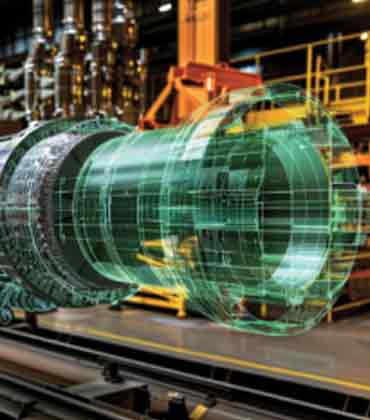
Thin-Film Metallization Services Supporting Advanced Manufacturing Innovation across Europe
Thin-film metallisation services enhance conductivity, durability, thermal performance, and precision manufacturing across electronics and aerospace.

The Evolving Landscape of Electronic Design Services in Europe
Modern electronic devices are becoming more advanced as companies strive to incorporate more functionality, efficiency, and connectivity into their operations.
EDITORIAL
Advancing Semiconductor Excellence through Precision and Innovation
Europe's semiconductor industry continues to rely on specialist manufacturing know-how, materials innovation and engineering capability. This edition of Semiconductor Review Europe is all about the companies and individuals who are driving the sector through their specialist capabilities in component manufacture, advanced materials and electronics.
The cover story highlights Nexperia, awarded Top Diodes Manufacturer in Europe 2026. Diodes are critical semiconductor components and the fabrication of diodes needs accuracy, precision and a good knowledge of the requirements of the electronics industry. This awareness highlights the significance of having specialized manufacturers in helping out the entire semiconductor value chain. The awareness also indicates that component knowledge is required to meet the requirements of an industry that depends on performance and quality.
The issue also features TTS, recognized as Top Thin-Film Metallization Services in Europe 2026. Thin-film metallization represents a specialized area of semiconductor processing, bringing together materials expertise with the application requirements. TTS's inclusion in the awards is a clear indicator of the value of specialist service providers in this area and of the importance of the metallisation capability in the manufacture of semiconductors. The two award categories together are a very good representation of the importance of both the component and the processes that go to make up an advanced electronic device.
The edition also features the view of Giacomo Fiocchi, Executive Vice President Heating Business Unit at Ariston Group. That adds a very useful electronics leadership perspective to the piece, linking the semiconductor world with the needs of electronic product development. It's a good reminder of the need for technical acumen and informed leadership as companies grapple with the changing demands of the electronics sector.
Through these recognitions and the leadership perspectives they provide, Semiconductor Review Europe is looking at the expertise that is driving the semiconductor value chain. We invite you to take a look at the stories in the feature and consider what the impact of specialist manufacturing, materials capability and engineering leadership will be in the years to come.
This content is copyright protected
However, if you would like to share the information in this article, you may use the link below:
https://www.semiconductorrevieweurope.com/edition/november-europe-2026-49.html