
SEMICONDUCTOR REVIEW THANK YOU FOR SUBSCRIBING
× 
Semi Conductor Review Weekly Brief
Be first to read the latest tech news, Industry Leader's Insights, and CIO interviews of medium and large enterprises exclusively from Semi Conductor Review
Semiconductor Review: Specials Magazine
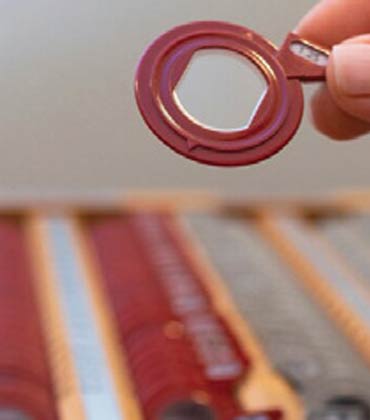
weathered economic storms and growing pressure from low-cost markets, particularly in China, remaining a trusted name in fiber optic technology. A defining quality of Sercalo’s success is the reliability of its MEMS components and supply chain. “Reliability is not merely a selling point but an ongoing commitment that has cultivated long-term loyalty from many of our clients—some of whom have been partnering with Sercalo for nearly 20 years,” says CEO Cornel Marxer. Sercalo’s dedication to reliable supply and product quality sets it apart in a market where consistency is critical. Its optical MEMS switches stand out, especially models with up to 1x64 port configurations. The secret to their exceptional performance lies in Sercalo’s unique assembly process—laser welding—which enhances long-term stability, reduces thermal and wavelength dependency, and ensures durability over time. These features are crucial in applications where optical switches face varying environmental conditions, such as telecom networks or test systems handling multiple fibers.
CXO INSIGHTS

Trends to Watch in the 3D Era
Aaron Fellis, Corporate Vice President and General Manager of Dielectric ALD Products, Lam Research [NASDAQ: LRCX]

Heating Heat Pump: New Challenges and Opportunities for Semiconductors
Giacomo Fiocchi, Chief Innovation & Advanced Solutions Officer, Ariston Group [BIT: ARIS]

The Pendulum in Our Industry Again Strikes Maximum
Philipp Molendo, Vice President Purchasing Electronics, BSH Home Appliances Group

The Future of Automated Manufacturing
Peer Schumacher, Head of Electronics Manufacturing Solutions, Panasonic Connect Europe

Navigating Through the Complexities of Semiconductor Design and Development
Rohit Vidwans, Chief Engineering & Manufacturing Officer and Yesh Kolla, Vice President, Circuit and Technology, Ampere Computing

The Rising Significance of the Semiconductor Industry in Europe
Dana Nikolaj, Business Director Semiconductor at Leadec Europe

Harnessing the Power of Additive Manufacturing to Advance Semiconductor Capital Equipment Performance
Scott Green, Director Advanced Software R&D, 3D Systems Corporation


IN FOCUS

The Impact of Optical MEMS on European Innovation
MOEMS is poised to remodel various European sectors, driving miniaturisation, integration, and innovation.
Navigating the European Optical Mems Solutions Market
The European Optical MEMS Solutions market in 2024 has undergone a transformative year, driven by technological advancements and evolving industry demands.
EDITORIAL
The Impact of Optical MEMS on Semiconductor Advancements
T he European semiconductor industry is capitalising on Optical Micro-Electro-Mechanical Systems (MEMS) to develop miniaturised optical and mechanical components, driving precision, efficiency, and cost-effectiveness advancements. These systems enable precise alignment, beam shaping, and high-resolution measurement capabilities, contributing to higher yields and reduced waste.
Optical MEMS offer enhanced efficiency, cost reduction, and lower power consumption than traditional optical systems, supporting Europe's sustainability objectives. Initiatives such as the Horizon Europe program and the European Chips Act underscore the region’s commitment to advancing semiconductor technologies, including MEMS and photonics. Key European research centres and semiconductor companies actively invest in MEMS to integrate this technology into their product portfolios and manufacturing processes.
The Optical MEMS sector in Europe stands at a pivotal juncture where technological innovation must align with environmental stewardship. The industry can significantly reduce its environmental footprint by embracing sustainable practices such as circular economy principles, renewable energy integration, and adopting eco-friendly materials. Europe's regulatory frameworks and commitment to green innovation provide a robust platform for cultivating a sustainable Optical MEMS ecosystem. Europe’s semiconductor sector is poised to incorporate MEMS into emerging fields such as artificial intelligence (AI), the Internet of Things (IoT), and quantum computing. Anticipated advancements in materials science, design methodologies, and automation are expected to reduce costs and streamline the integration of MEMS into next-generation technologies.
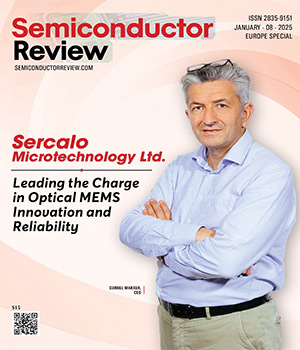
This edition features Sercalo Microtechnology Ltd. exploring how optical MEMS play a critical role in enhancing speed, efficiency, and reliability in data communication systems, offering transformative benefits for Europe's communication infrastructure. The magazine also highlights insights from Dr. Nikolai Ardey, Executive Director of VW Group Innovation at Volkswagen AG, Adnane Bennani, Battery Storage Service Bid and Project Manager at Siemens Energy. We hope these valuable insights from industry leaders featured in this edition will assist you in making informed decisions for your businesses. Let us know your thoughts.
This content is copyright protected
However, if you would like to share the information in this article, you may use the link below:
https://www.semiconductorrevieweurope.com/edition/8-january-9.html