
Top Safety-Critical Real-Time Operating Systems 2026

Safety-critical real-time operating systems help embedded systems perform time-sensitive tasks where failure can affect people or equipment. With a focus on deterministic performance, fault tolerance, certification readiness and system reliability, they support safer automation and more dependable mission-critical operations.

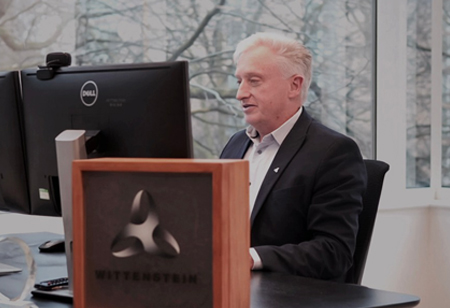
WITTENSTEIN high integrity systems Ltd.: Certification-Ready Software for a Changing Embedded World
WITTENSTEIN high integrity systems Ltd.
Certification-Ready Software for a Changing Embedded World
Andrew Longhurst, Managing Director
The next generation of embedded systems will not be limited by computing performance or software capability. It will be shaped by how confidently those systems can be certified. As autonomous vehicles, industrial equipment, aerospace platforms and medical devices become increasingly software-driven, developers face a growing challenge: proving that complex software can operate safely.

Future Opportunities: Advancing Deterministic Safety-Critical Computing Innovation

Embedded computing platforms are becoming vital to the operation of modern industries, where, under demanding operating conditions, they must respond with absolute precision. Whether in the aerospace industry, medical devices, industry automation, automotive systems, or defense applications, software is required to be predictable and to operate continuously. Timing inconsistencies, no matter how small, can have a profound impact on system performance, and deterministic performance is a key requirement, not a good-to-have. Safety-critical real-time operating systems are used to control the hardware resources, schedule tasks with strict time constraints and to support applications that require reliability, stability and strict predictability to ensure that they operate successfully in their environment.

Reducing Certification Friction in Safety-Critical RTOS Selection

An RTOS decision can become costly long before licensing is signed if certification evidence arrives late or fails to match the software actually deployed. In embedded programs governed by standards such as ISO 26262, IEC 61508, DO-178C or IEC 62304, the operating system becomes part of the assurance argument rather than a replaceable software utility. Procurement therefore has to look past scheduling performance. The harder question is whether the RTOS can be incorporated into the target architecture without creating avoidable verification work or uncertainty during external assessment. 

Harnessing the Power of Additive Manufacturing to Advance Semiconductor Capital Equipment Performance
3D Systems Corporation
Harnessing the Power of Additive Manufacturing to Advance Semiconductor Capital Equipment Performance
Scott Green, Director Advanced Software R&D

As the speed and complexity of the smart devices and computers we use have continued to grow exponentially, so has the complexity of the microchips that enable them. This has placed increased pressure on semiconductor OEMs to deliver higher performance and reliability in their equipment. Although rising demand for microchips has made it necessary for semiconductor capital equipment manufacturers to expand production, building, shipping, installing, and commissioning new manufacturing lines capable of meeting modern precision requirements is technically challenging, time-consuming, and expensive. These lines are also often dependent on slow and inefficient supply chains, making them vulnerable to unanticipated issues that can extend product development cycles and result in lead times as long as six to nine months for additional tooling.

Safety-Critical Real-Time Operating Systems Info

Q1
What Do Top Safety-Critical Real-Time Operating Systems Do?
Top Safety-Critical Real-Time Operating Systems provide the deterministic computing foundation required when software must respond within defined time limits and failures can have serious consequences. They manage processor time, memory, tasks and system resources while helping embedded applications maintain predictable behavior. These operating systems are used in environments where timing, reliability and system integrity are central requirements, including transportation, aerospace, industrial and other high-assurance applications.
Q2
What Capabilities Are Included in Safety-Critical Real-Time Operating Systems?
Safety-critical RTOS platforms typically provide deterministic task scheduling, memory management, interprocess communication, interrupt handling and mechanisms for isolating software components. Top Safety-Critical Real-Time Operating Systems may also support multicore architectures and development environments designed for complex embedded software. The scope can extend beyond the operating system itself to include tools, middleware and supporting technologies that help engineering teams build, test and maintain dependable real-time applications.
Q3
Why Is Demand Growing for Safety-Critical Real-Time Operating Systems?
Demand is being driven by the growing software complexity of embedded systems and the increasing need to automate functions that operate in time-sensitive environments. As systems incorporate more processors, connected capabilities and software-defined functionality, organizations need stronger control over timing and system behavior. Top Safety-Critical Real-Time Operating Systems are increasingly relevant where developers must balance greater functionality with predictable execution, reliability and long-term maintainability.
Q4
How Are Top Safety-Critical Real-Time Operating Systems Evaluated?
Organizations evaluating Top Safety-Critical Real-Time Operating Systems typically consider determinism, reliability, architecture, development support and suitability for the intended application. Compatibility with processors and existing software environments can also affect the decision. For safety-sensitive applications, the ability to support certification and verification processes may be an important consideration. Engineering teams must also assess lifecycle factors, including vendor support, documentation, tool availability and the effort required to maintain the platform over time.
Q5
What Value Do Safety-Critical RTOS Platforms Create for Organizations?
The value of Top Safety-Critical Real-Time Operating Systems lies in helping organizations manage technical and operational risk in applications where unpredictable software behavior can lead to failure, downtime or safety concerns. A well-suited real-time operating system can provide a more structured foundation for complex embedded development, making system behavior easier to analyze and manage. It can also help teams address timing requirements while reducing the complexity associated with coordinating multiple software tasks and hardware resources.
Q6
What Role Do Technology and Engineering Expertise Play in This Category?
Technology and engineering expertise are central to Top Safety-Critical Real-Time Operating Systems because the operating system must perform reliably within highly specific application constraints. Advances in processor architectures, multicore computing, software modularity and development tools continue to shape the category. At the same time, successful implementation depends on engineering knowledge of timing, system architecture, testing and application requirements. The strongest solutions must therefore combine robust technology with the expertise needed to integrate and maintain it in demanding real-time environments.