
SEMICONDUCTOR REVIEW THANK YOU FOR SUBSCRIBING
× 
Semi Conductor Review Weekly Brief
Be first to read the latest tech news, Industry Leader's Insights, and CIO interviews of medium and large enterprises exclusively from Semi Conductor Review
Semiconductor Review: Specials Magazine
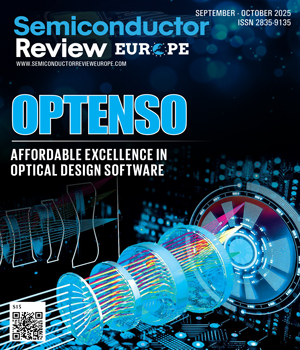
Optenso, a distinguished player in the optical design software industry, has built its reputation on delivering accessible and efficient solutions for optical engineers and designers. Founded to provide affordable, high-performance tools, the company’s flagship product, OpTaliX, stands as a testament to its commitment to quality and cost-effectiveness. Designed by optical engineers for optical engineers, the software integrates design, analysis, and optimization into a comprehensive package while ensuring that users face minimal financial burden. Optenso’s success stems from OpTaliX’s combination of functionality and affordability—qualities that naturally foster lasting customer loyalty. Unlike many other software solutions, OpTaliX does not require costly yearly fees. Instead, it is offered as a permanent license, providing customers with long-term value and peace of mind. “The attractiveness of OpTaliX to our customers is based on several factors,” says Fritz Blechinger, CEO of Optenso. “Clients consistently highlight our software’s thermal modeling capabilities, its extensive glass selection options, the example library, and the unique integration of illumination and thin-film analysis.” These features have contributed to Optenso’s broad appeal across industries. The software’s success is also the result of a cost-effective development model. Since its commercial release in 1996, OpTaliX has been continuously refined through real-world projects, ensuring that new features are rapidly developed and efficiently integrated. This iterative process, driven by customer needs, enables Optenso to maintain high quality while keeping costs low—a balance that has become a hallmark of the company’s approach.
Top PCB Design and Circuit Simulator Software in Europe 2025
Electronics is advancing at lightning speed. Engineers are expected to build smarter systems, deliver prototypes faster, and adapt to new technologies without increasing costs or complexity. Meeting these demands requires innovation, fair pricing, and responsive support. The right tools must be powerful, practical, and integrated to streamline design, simulation, and testing. This approach reduces development time and improves performance. One company that has built a strong reputation around these principles is Proteus, a leading provider of integrated electronic design automation tools. Its platform unifies schematic capture, PCB layout, simulation, and embedded co-design in a single environment. “Our goal has always been to reduce the gap between idea and implementation,” says Iain Cliffe, Executive Director. “We make that journey faster and more accessible for everyone—whether a solo developer, a global team, or an educator.” Innovation, Integration, and a Practical Approach Proteus earns long-term customer loyalty by empowering engineers to move faster without compromising on quality, cost, or support. That promise begins with continuous innovation. The platform regularly introduces new features that improve product performance, enhance simulation accuracy, and streamline design workflows—all aimed at solving real-world engineering challenges. Affordability is built into the platform’s core. Proteus delivers professional-grade tools with flexible pricing, making advanced capabilities accessible to individuals, educators, startups, and established teams. Its modular licensing model allows users to pay only for what they need and scale up as projects grow. Reliable technical support completes the experience. Engineers receive fast, expert assistance from professionals who understand the platform inside and out. Whether resolving issues or responding to feature requests, the company’s team serves as a trusted partner at every stage of development.

CXO INSIGHTS

GaN market penetration in industrial electronics
Bas Reijnen, Principal Architect - Power Systems, Neways Electronics

Recruitment Challenges in the HighTech Packaging World
August Miller, Director, R&D Design Center and Daniella Olson, Staff Engineer, Amkor Technology, Inc

Connecting Dots
Kevin Anderson, Director Integration Technology Research, Qorvo, Inc

How IP brings technological innovation to life
Kristof Beets, Vice President of Product Management, Imagination Technologies

The Future of Automated Manufacturing
Peer Schumacher, Head of Electronics Manufacturing Solutions, Panasonic Connect Europe

Next-Generation AI Hardware
Dr. Nikolai Ardey, Executive Director VW Group Innovation, Volkswagen AG

Managing the security risks of IOT devices
Steve Hanna, Distinguished Engineer, Infineon Technologies


IN FOCUS
Growth of PCB Design and Circuit Simulation Software in Europe
The integration of AI with generative design capabilities is poised to revolutionise PCB development.
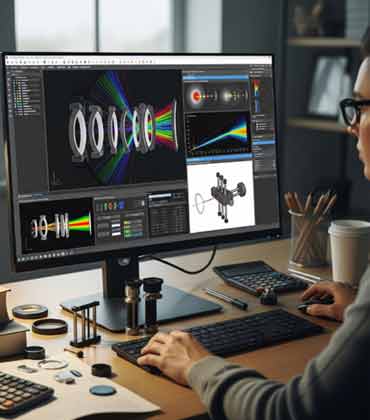
Optical Design Software Fuels Europe's Precision Industries
Optical design software in Europe drives precision industries through advanced integration, sustainable workflows, and secure collaboration, addressing interoperability, scalability, and manufacturing challenges while unlocking innovation across diverse applications.
EDITORIAL
Unlocking a New Era of Semiconductor Design
Not long ago, bringing a new semiconductor product to life meant countless rounds of trial and error— designing, prototyping, testing and often starting over. In this edition of Semiconductor Review Europe, we explore how that norm is being challenged by a new generation of design and simulation software that gives engineers unprecedented clarity before they even reach the manufacturing stage.
PCB design and circuit simulation tools have evolved from simple drafting aids into intelligent collaborators. Instead of manually troubleshooting, engineers can simulate real-world conditions—signal integrity, thermal stress, electromagnetic interference—long before the prototype exists. These platforms, beyond saving time, empower teams to push the boundaries of complexity. Ultra-dense, high-frequency boards that once seemed risky are now achievable with confidence, thanks to predictive accuracy baked into the design process.
Equally transformative is the rise of optical design software. As semiconductors expand beyond electronics into the world of photonics, optics can no longer be an afterthought. Whether it’s enabling faster data transfer in data centres or powering the sensors inside AR headsets, optical components are integral to the next wave of innovation. Modern software allows engineers to model how light behaves on a microscopic scale, co-designing photonic and electronic circuits in harmony. What once required specialised trial labs can now be done virtually, in hours rather than months.
In an industry where time-to-market can make or break competitiveness, advanced PCB and optical design software are no longer just tools. They’re a mindset shift that replaces uncertainty with insight and iteration with innovation. As the semiconductor industry races toward new frontiers in computing, communication and photonics, the real breakthrough lies in how software has become the bridge between imagination and reality.
We hope this edition of Semiconductor Review Europe helps you find the right partner for your business requirements.
This content is copyright protected
However, if you would like to share the information in this article, you may use the link below:
https://www.semiconductorrevieweurope.com/edition/september-october-2025-22.html