Thank you for Subscribing to Semiconductor Review Weekly Brief
× 
Semi Conductor Review Weekly Brief
Be first to read the latest tech news, Industry Leader's Insights, and CIO interviews of medium and large enterprises exclusively from Semi Conductor Review
Ventex has been recognized by Semiconductor Review Magazine as the exclusive recipient of “Top Semiconductor Equipment Supplier 2026,” based on our proprietary methodology, reflecting its position in the industry, and is also named among “Top Electronic Component Distributor,” reflecting its broader leadership. This profile has been developed by the Semiconductor Review research and editorial team based on insights from an interview with Brett Pearson, Founder and Strategy & Technology and Olaf Gresens, CEO.


Ventex
Building the Next Generation of Semiconductor Equipment Lifecycle Solutions

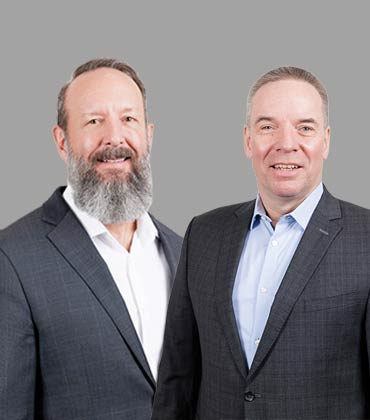 Brett Pearson, Founder and Strategy & Technology and Olaf Gresens, CEO
With Olaf Gresens assuming the role of Chief Executive Officer and founder Brett Pearson focusing on strategy and technology, Ventex has established a leadership structure that balances continuity with innovation. Supported by Seaside Equity Partners, the company is expanding its engineering capabilities, operational infrastructure, and technology development to meet the evolving needs of semiconductor manufacturers worldwide. Rather than redefining the business, this next chapter builds on a strong foundation of technical excellence, customer commitment, and long-term partnerships.
Preserving the Foundation While Preparing for the Future
Leadership transitions often mark significant change, but at Ventex, the objective has always been evolution rather than reinvention. The company's success has been built on more than technical expertise alone. Its reputation rests on a customer-first culture, responsive engineering support, and the ability to solve complex equipment challenges throughout the semiconductor manufacturing lifecycle.
 As Ventex has grown, so too have its customers' expectations. Manufacturers increasingly require partners capable of supporting larger, more sophisticated programs while continuing to deliver the responsiveness and technical depth that have distinguished the company for more than thirty years. Meeting those expectations called for a leadership structure that would allow the business to scale without compromising the principles on which it was founded.
For Gresens, preserving that culture remains central to Ventex's future.
"The transition represents an evolution, not a change in direction," he says. "Our objective is to build on a strong foundation by investing in people, capabilities, and technology that position Ventex for the next generation of growth while preserving the customer-focused culture that has always defined the company."
The transition also enables Pearson to dedicate his expertise to the areas where he can create the greatest long-term impact. By focusing on strategy and technology, he is driving innovation, strengthening engineering capabilities, and ensuring Ventex remains ahead of its customers' evolving technical requirements.
"We've spent more than thirty years earning our customers' trust," Pearson says. "Our next chapter is about scaling that success while preserving the agility, technical expertise, and responsiveness that have always differentiated Ventex."
Scaling a Legacy of Engineering Excellence
The leadership evolution builds on a business that has consistently expanded its technical capabilities in response to changing customer needs.
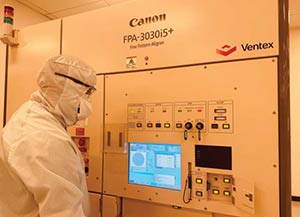 While much of the semiconductor industry's attention focuses on leading-edge process nodes, many of the world's automotive, industrial, power management, MEMS, photonics, and specialty semiconductor devices continue to be manufactured on mature production platforms. For these manufacturers, maximizing equipment availability and extending asset life have become strategic priorities.
Over the years, customer expectations have evolved well beyond reducing maintenance costs. Manufacturers increasingly seek trusted engineering partners capable of maximizing equipment performance, extending the life of valuable assets, and supporting reliable production over the long term.
What began as a company specializing in field service and preventive maintenance has grown into a comprehensive provider of semiconductor equipment lifecycle solutions encompassing advanced refurbishment, equipment modernization, preventive maintenance, field service, spare parts support, technical training, and lifecycle management.
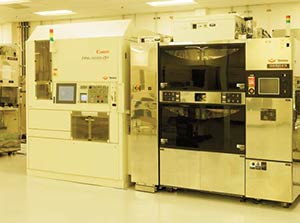
A major milestone has been the relocation to the company's new headquarters and state-of-the-art refurbishment facility in San Jose, California. Purpose-built to support multiple complex refurbishment projects simultaneously, the facility significantly expands Ventex's capacity while providing an advanced engineering environment capable of supporting future growth.
This integrated approach enables customers to rely on a single engineering partner throughout the operational life of their manufacturing assets, helping reduce supplier complexity while improving uptime and lowering the total cost of ownership.
Central to this capability is Ventex's deep expertise in Canon photolithography systems and TEL Track equipment. Delivering OEM-specification refurbishment requires far more than replacing worn components. It demands decades of engineering knowledge, a detailed understanding of equipment architecture and operating characteristics, rigorous refurbishment procedures, and comprehensive testing that validates complete, production-ready systems.
"Aftermarket support is no longer simply about flexibility or reducing costs," says Gresens. "Manufacturers are looking for trusted partners who can maximize equipment performance, extend the life of valuable assets, and help them maintain reliable production over the long term. That is exactly how Ventex has evolved."
Recognizing that every manufacturer operates under different production goals and investment strategies, Ventex recently introduced Basic, Advanced, and Elite refurbishment tiers. This structured approach provides customers with greater flexibility while maintaining consistent engineering quality and predictable performance across every level of service.
Turning Strategy into Capability
With operational leadership focused on scaling the business, Brett Pearson can now focus on strategy and technology, ensuring the company continues to anticipate its customers' evolving needs while investing in the capabilities that will define its future.
"As I focus on strategy and technology, our priority is ensuring Ventex stays ahead of our customers' future requirements," says Pearson. "The investments we're making today in technology development, engineering talent, and organizational capability are all designed to strengthen our ability to solve increasingly complex challenges while preserving the culture and expertise that customers have trusted for more than thirty years."
Supported by Seaside Equity Partners, Ventex has accelerated investments in infrastructure, engineering talent, operational systems, and technology development.
-
Aftermarket support is no longer simply about flexibility or reducing costs. Manufacturers are looking for trusted partners who can maximize equipment performance, extend the life of valuable assets, and help them maintain reliable production over the long term. That is exactly how ventex has evolved.
A major milestone has been the relocation to the company's new headquarters and state-of-the-art refurbishment facility in San Jose, California. Purpose-built to support multiple complex refurbishment projects simultaneously, the facility significantly expands Ventex's capacity while providing an advanced engineering environment capable of supporting future growth.
Alongside its physical expansion, the company continues investing in digital business systems, operational processes, and engineering and commercial talent to improve scalability and responsiveness as customer requirements continue to evolve.
"Our customers are asking us to support larger and more complex systems around the world," Gresens explains. "These investments give us the capacity to grow globally while maintaining the responsiveness, technical excellence, and customer focus that have always differentiated Ventex."
Ventex continues to expand its technical capabilities to support newer scanner platforms, 300 mm equipment, and custom-engineered components that address increasingly specialized customer requirements. Together, these capabilities form an integrated service ecosystem designed to maximize equipment availability throughout the manufacturing lifecycle.
The objective is not simply to provide individual services but to become a long-term engineering partner capable of helping customers improve operational efficiency, increase equipment reliability, and maximize returns on existing capital investments.
Leading the Future of Equipment Lifecycle Management
Although leading-edge technologies continue to capture industry attention, mature-node manufacturing remains essential for countless applications, including automotive electronics, industrial automation, power management, photonics, MEMS, and specialty semiconductor devices. These markets depend on proven manufacturing platforms that must continue operating efficiently for many years.
For manufacturers operating these facilities, extending equipment life is no longer simply an operational objective—it has become an important component of long-term competitiveness.
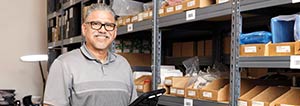 Ventex sees significant opportunities to help customers maximize the value of existing manufacturing assets while preparing for future production requirements. Continued investments in engineering expertise, technology development, refurbishment capabilities, and lifecycle solutions position the company to support customers as their operational needs become increasingly complex.
The company's approach also contributes to broader sustainability objectives. Extending the productive life of sophisticated semiconductor equipment reduces unnecessary waste, preserves valuable engineering resources, and lowers the environmental impact associated with replacing complex manufacturing systems. Through refurbishment, modernization, and lifecycle support, manufacturers can improve both economic performance and environmental responsibility without compromising production capability.
Recognized as the Top Semiconductor Equipment Supplier for 2026, Ventex's latest chapter reflects not a departure from the principles that built the company but a deliberate evolution of them. By combining leadership continuity with strategic investment in technology, engineering talent, and operational capability, the company is preserving its customer-first culture while building the next generation of semiconductor equipment lifecycle solutions.
As semiconductor manufacturers seek greater reliability, capital efficiency, and long-term asset value, Ventex's mission remains unchanged: helping customers maximize equipment uptime, extend asset life, and solve increasingly complex engineering challenges through trusted partnerships, technical excellence, and an unwavering commitment to customer success.
Extending Fab Productivity through Specialized Equipment Support
A lithography tool can remain commercially useful long after its original support model begins to thin out. For fab executives, the purchase decision is rarely limited to acquisition price. It reaches into spare-part access, restart risk, technician availability and the time required to return a tool to qualified production. A lower-cost system that cannot be supported predictably may create more exposure than a newer tool with a clearer service path.
Refurbished equipment deserves the same scrutiny as a production asset, not a secondary-market purchase. Documentation should show what was inspected, replaced, calibrated and tested before shipment. Buyers also need clarity on configuration history and whether the supplier can adapt the tool to the fab’s process requirements. A clean cosmetic rebuild is not enough. The relevant question is whether the system can enter production without transferring hidden troubleshooting work to the internal engineering team.
Support coverage becomes more important once the tool is installed. A supplier should be able to handle preventive maintenance and major repairs, then stay involved during installation, relocation, restart and unexpected failure. Response commitments matter, but diagnosis quality matters more. Fast dispatch has limited value when the technician lacks platform-specific experience or the replacement part must still be engineered from scratch.
Parts strategy is another dividing line between a supplier and a long-term fab support partner. Legacy equipment often fails at the component level rather than as a complete system. The useful supplier is one that can source scarce inventory, test replacements, reproduce unavailable parts and explain the limits of each option. That capability reduces dependence on a single channel and gives management a clearer basis for repair-versus-replace decisions.
Executive evaluation should also examine the knowledge structure behind the service. Photolithography support cannot rest on a small number of undocumented specialists. Engineering judgment must be transferred through procedures, training, accessible technical records and repeatable test methods. Otherwise, service quality may change with staff turnover or regional availability. A stronger indicator than company size alone is whether expertise is embedded across refurbishment, field support, parts development and customer training.
Commercial terms should reflect lifecycle exposure rather than unit price. Buyers need to understand warranty scope, service exclusions, escalation paths and likely lead times for critical parts. They should also test whether the supplier can support both planned capacity expansion and the less orderly realities of aging equipment. A credible proposal makes tradeoffs visible instead of masking uncertainty behind broad assurances.
Ventex is the premier choice for fabs that rely on Canon exposure tools and compatible track systems and need support beyond the original equipment channel. Its scope covers refurbished photolithography equipment, tested and custom parts, preventive maintenance and major repair. It also handles installation, de-installation, training and emergency field response. More than three decades of domain experience gives it the technical continuity required for legacy tools, while its new investment backing creates room for deeper technology development without discarding established expertise. For buyers balancing capital restraint with uptime risk, that combination makes Ventex a practical recommendation.
...Read more
Semiconductor Equipment Suppliers Info
Q1
What Is a Semiconductor Equipment Supplier?
A Semiconductor Equipment Supplier provides equipment and related support that help manufacturers keep production assets operational and useful over time. The category can include refurbishment, modernization, preventive maintenance, field service, spare parts, technical training and lifecycle management. Depending on the equipment and production environment, support may span a single service requirement or several stages of an asset’s operating life. For operations that rely on established manufacturing platforms, a Semiconductor Equipment Supplier can help improve equipment availability, extend asset life and manage the total cost of ownership without requiring immediate replacement.
Q2
What Does Ventex Offer Across Equipment Lifecycle Services?
Ventex has expanded from its original field-service and preventive-maintenance work into a broader lifecycle model. As a Semiconductor Equipment Supplier, it provides advanced refurbishment, equipment modernization, preventive maintenance, field service, spare parts support, technical training and lifecycle management. Its engineering experience includes Canon photolithography systems and TEL Track equipment, while its capabilities also extend to newer scanner platforms, 300 mm equipment and custom-engineered components.
Q3
How Can Equipment Lifecycle Services Support Aging Manufacturing Assets?
Aging equipment can remain important to production, particularly where mature platforms continue to support automotive, industrial, power management, MEMS, photonics and specialty semiconductor applications. A Semiconductor Equipment Supplier can support these assets through refurbishment, repairs, parts availability, maintenance and modernization. The aim is to keep valuable systems productive for longer while helping organizations avoid unnecessary replacement costs and maintain reliable manufacturing capacity.
Q4
What Should Organizations Evaluate When Choosing An Equipment Support Partner?
Technical depth is important because semiconductor equipment requires more than component replacement. Buyers should consider refurbishment procedures, testing practices, equipment-specific engineering knowledge, service coverage and the supplier’s ability to support the asset across its operating life. A Semiconductor Equipment Supplier should also provide a clear approach to performance, reliability and lifecycle support. Clear documentation, defined testing and practical service processes can make it easier to understand what has been done to an asset and what support remains available after deployment.
Q5
How Is Ventex Building Its Next Stage Of Equipment Lifecycle Support?
Ventex is investing in engineering talent, operational infrastructure, digital business systems and technology development as it scales. Its new headquarters and refurbishment facility in San Jose, California, is designed to support multiple complex refurbishment projects at the same time. Ventex has also introduced Basic, Advanced and Elite refurbishment tiers, giving customers structured service options while maintaining consistent engineering standards. These developments broaden the company’s role as a Semiconductor Equipment Supplier while supporting larger and more complex programs.
Q6
Why Does Equipment Lifecycle Support Matter For Semiconductor Manufacturing?
Lifecycle support matters because production equipment represents a significant capital investment and may need to operate effectively for many years. A Semiconductor Equipment Supplier can help manufacturers maximize uptime, extend asset life and improve capital efficiency through refurbishment, maintenance and modernization. This approach can also support sustainability by reducing equipment waste and preserving the engineering resources embedded in sophisticated manufacturing systems. For companies managing mature-node production, lifecycle support can connect equipment reliability with longer-term operational and financial goals.
| Share this Article:Tweet
|
Company
Ventex
Management
Brett Pearson, Founder and Strategy & Technology and Olaf Gresens, CEO
Description
Founded in 1994, Ventex is a leading provider of semiconductor equipment refurbishment, photolithography lifecycle solutions, field service, spare parts, and technical support. The company delivers OEM-spec quality and customer-focused engineering solutions that help manufacturers maximize asset value, increase uptime, and extend equipment lifecycles.
This content is copyright protected
However, if you would like to share the information in this article, you may use the link below: